
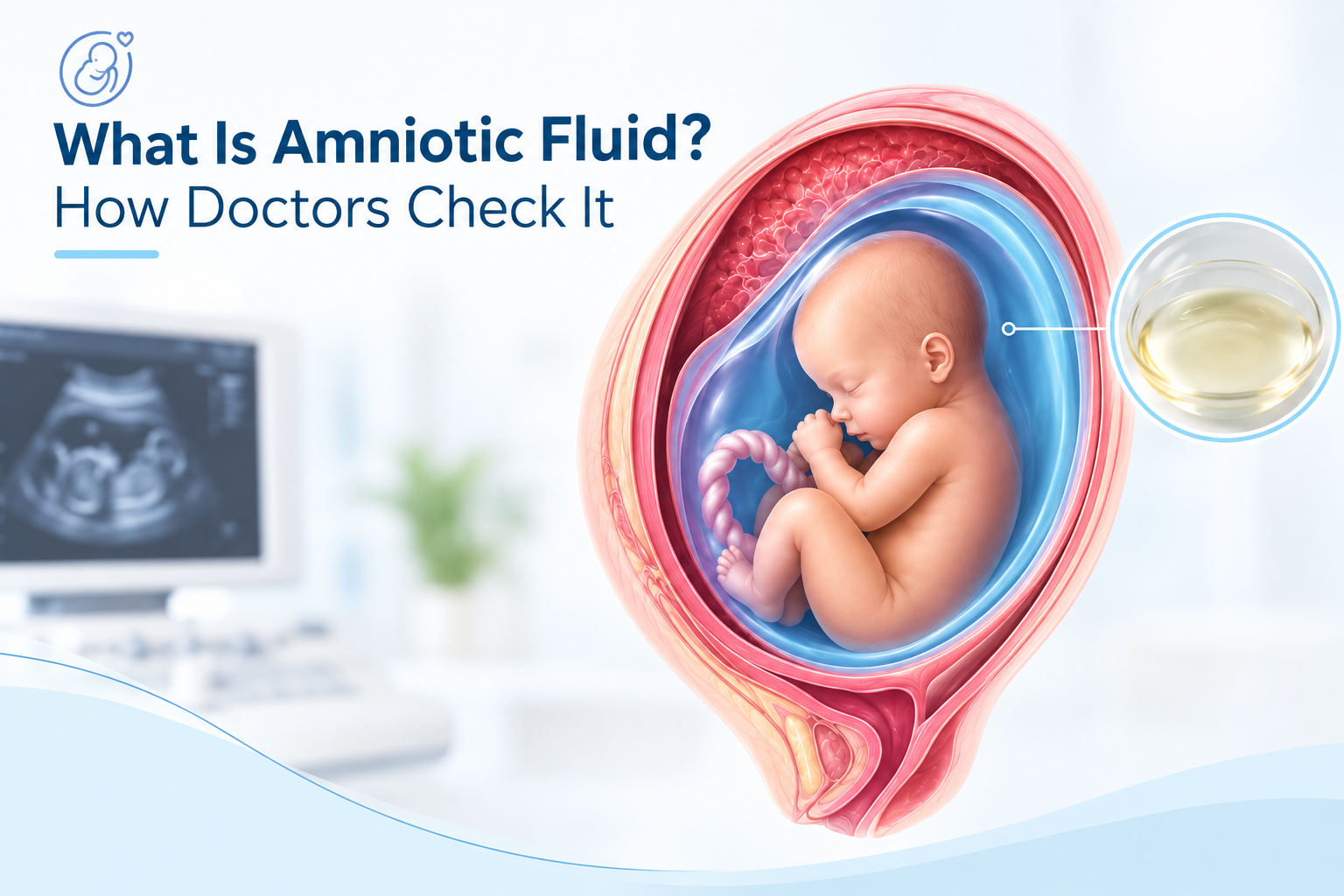
During the pregnancy your baby grows inside a protection shield called amniotic sac it is filled with the amniotic fluid. It can be also said as the protection bag and also usually called the bag of waters.
What is an Amniotic fluid?
Amniotic fluid is the clear, pale yellow liquid that surrounds an unborn baby inside the amniotic sac. It protects the baby throughout the delivery period from harm, keeps them warm, and helps their lungs, muscles, and bones grow properly and it also cushions the baby against hard pressure from uterine contractions.
How Amniotic Fluid Is Made Of?
Amniotic Fluid Formation Stages
Amniotic fluid is an important part of your baby's environment inside the womb; the development of amniotic fluid is organized into two different stages, they are: Early gestation and Late gestation.
While the early stage is the first stage of pregnancy, from fertilization until about within 8 weeks of time period can be called the Early gestation stage (the first trimester), after 8 weeks to till birth which encompasses the fetal period from 8 weeks to birth can be called as Late gestation stage(the second and third trimesters).
Amniotic Fluid Made Of?
It majorly consists of water and other things like Water, Electrolytes and Minerals, Fetal Urine, Fetal Lung Fluid, Proteins and Peptides, Hormones, Immune Components, signaling molecules, cells, and other biological substances.
Water: Water is the main component of amniotic fluid. As of scientific reviews the amniotic fluid mostly consists of water; In early pregnancy, much of this water comes through exchanges involving maternal fluid and the developing fetal environment.
Electrolytes and Minerals: Amniotic fluid contains important electrolytes and minerals, including:
- Sodium
- Potassium
- Chloride
- Calcium
- Magnesium
- Phosphate
- Bicarbonate
Fetal Urine: As pregnancy progresses, fetal urine becomes the largest source contributing to amniotic fluid volume. During the second trimester at around 10 weeks the baby begins producing urine that enters the amniotic cavity so from the second and third trimester period it becomes a major contributor to the fluid volume; this does not mean amniotic fluid is simply “urine.”
Fetal Lung Fluid: The developing lungs also contribute fluid to the amniotic environment. Fetal pulmonary secretions contain substances associated with lung development, including phospholipids and surfactant-related components.
Proteins and Peptides: Amniotic fluid contains a wide range of proteins and smaller protein fragments called peptides.
Hormones: Amniotic fluid also contains hormones and signaling molecules. These molecules are part of the complex biochemical environment surrounding the developing fetus; scientific literature has reported substances such as:
- Growth hormone
- Prolactin
- Insulin-like growth factor-1 (IGF-1)
- Epidermal growth factor (EGF)
Immune Components: Amniotic fluid contains several substances associated with the body's innate antimicrobial defense. Scientific reviews have identified components such as:
- Lactoferrin (Promotes the growth of good gut bacteria)
- Lysozyme (Attacks and destroys the cell walls of Gram-positive bacteria to prevent infections.)
- Defensins (protect the baby and the womb by killing bacteria, fungi, and viruses.)
- Cathelicidin LL-37 (protecting the fetus from intrauterine infections by neutralizing bacteria and viruses.)
- Secretory leukocyte protease inhibitor (it acts as a protector that helps prevent unnecessary damage to the tissues surrounding the baby).
These components have antimicrobial activity that all contribute to protecting the fetal environment from certain microorganisms.
What are Amniotic Fluid levels?
Amniotic fluid levels refer to the estimated amount of fluid surrounding the baby at a particular stage of pregnancy, amniotic fluid is measured by ultrasound scan (tiffa/anomaly scan), and the doctor use measurement called “fundal height” it mean the distance between the top of uterus and the pubic bone.
Amniotic fluid Index (AFI)
In the AFI method, the uterus is divided into four sections, they are:
The doctor measures the deepest vertical pocket of amniotic fluid in each quadrant and adds the four measurements together.
AFI = Pocket 1 + Pocket 2 + Pocket 3 + Pocket 4
What if amniotic fluid is too low?
According to the amniotic fluid index generally ranges from 5 cm to 25 cm during the third trimester, the levels below 5 cm indicate low fluid (oligohydramnios): it will lead to some complications like miscarriage in some cases, and while levels above 24 cm to 25 cm indicate high fluid (polyhydramnios): it might be causes symptoms like swollen feet, breathlessness and It can put pressure on neighboring organs, too.
Conclusion:
Amniotic fluid is a protection shield for your baby from the starting to till birth so consciousness and daily routine checkups is must and should any doubts related to amniotic levels do consult with your personal doctor.
Common Questions:
What are normal amniotic fluid levels?
From 5 cm to 25 cm amniotic levels can be said as normal amniotic fluid levels.
What is meant by low amniotic fluid levels?
During the third trimester 5 cm to 25 cm the levels below 5 cm indicate low amniotic fluid level.
What is meant by high amniotic fluid levels?
During the third trimester the amniotic levels are above 24 cm to 25 cm indicating high amniotic fluid level.
If you're unsure yourself, Naren Ultrasound & Fetal Medicine Center can help you through the process of detecting your baby's overall growth. That's why you need to book a Ultrasound Scan with us. We look forward to helping you get through this important step in your pregnancy.
About the Doctor

Dr. Naren Satya
Consultant Radiologist
Naren Ultrasound and Fetal Medicine Center, Visakhapatnam
Related Topics